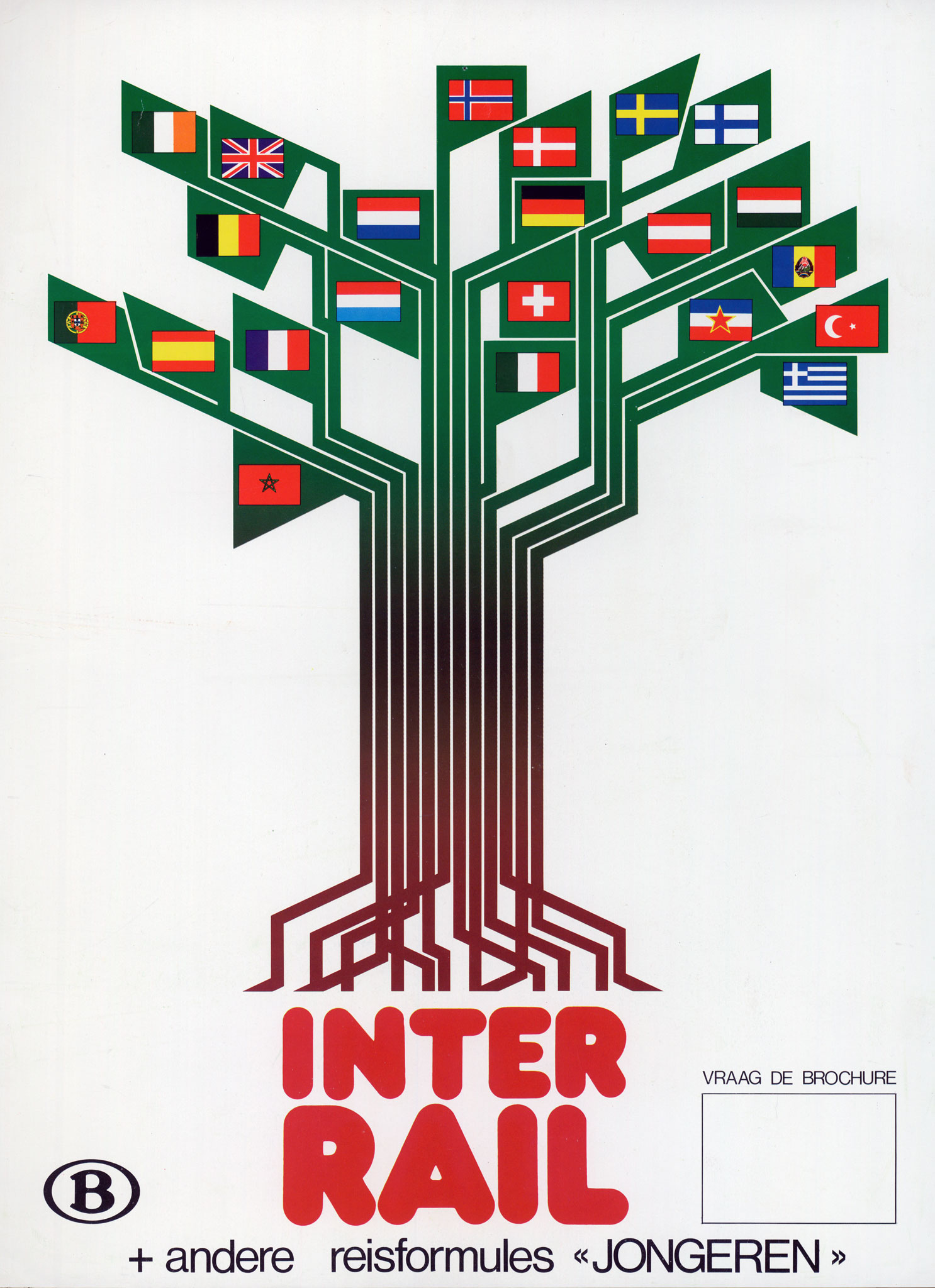
Reservations
You need some reservations. Certain routes you cannot do without them (eg to Stockholm, or through the tunnel to the UK). Other routes you can usually find alternatives to reservation-only trains, but those alternatives usually mean lots of changes and often very full trains (which you might end up with no seat on). So be aware before you set off that the price you paid for the ticket is not the last money you’ll spend on train travel during the month. Reservations are also useful if you want or need to get from A to B quickly.
If you do need reservations, in some cases that means planning in advance. This detracts from the flexibility of the interrail ticket, unfortunately. The Eurotunnel, for example, you probably need to reserve a week before you want to travel. Most though can be reserved a day in advance (or often last minute)
Do your reservations at the station. I can’t stress this enough. You might have to queue for 15 minutes to talk to someone, but those people are so helpful and they seem to genuinely enjoy helping you come up with the best routes. It’s far better than using the app and cheaper.
The App
The app is pretty good in many ways. It seems to be basically stable, doesn’t crash, and manages to come up with a lot of useful data. The ticket generation function works well. But…
- It doesn’t always tell you the best route and especially from and to cities with multiple stations. You could often get a better connection if you had a proper timetable or if the app didn’t choose your change station. So, it’s good to play around with it
- It’s crap for reservations. Do yourself a favour and go into the travel office at major stations. In all cases bar one, I found the staff at those places to be helpful, friendly, and creative. They seem to genuinely enjoy trying to help you work out the best route
- As an addendum to the above the app wants to charge you a €10 booking fee on every reservation. People in stations do it for free (as well as better)
Covid
Obviously mandatory covid precautions change all the time – on this trip we travelled through 12 countries, and only Germany and Italy required passengers to wear masks (in both cases specifically FFP2 masks). But obviously be sensible. You can wear masks when they aren’t mandated. On a very packed train for example or if you are not feeling 100%.
On the positive side, 5 of us travelled around the continent for a month, on often extremely packed trains (the app tells me we took 65 trains and spent well over 100 hours on trains) and none of us caught covid. So, don’t be afraid to do it.
Specific countries
Most of the advice applies everywhere, but there are some countries that have some unique features
France: Fast trains and fantastic rail infrastructure, but reservations are both necessary and expensive. You have to decide what’s most important for you. For example, when travelling from Lille to Genova – rather than the quickest route through France we opted to go through Belgium, Germany and Switzerland. It took longer but with 5 of us, the cost of doing it through France would have been prohibitive.
The UK: I hate to say this, but consider not going. It’s a beautiful country with loads of fascinating places, but at least at the moment (summer 2022) it’s chaotic. Trains are being cancelled with no notice or are running very late (and at the moment there are a lot of strikes meaning there are regularly days with no trains). Plus you need to get across the Channel which either means well in advance reservations or a ferry crossing which is no longer designed for train passengers. Also, of course, Brexit means that passport control in both directions can be a long and painful process (though having said that, we didn’t experience problems in this regard)
Sweden: Long distance Swedish trains need to be reserved and it seems at least at the moment that popular routes (eg Copenhagen to Stockholm) are fully booked up months in advance.
South Eastern Europe: Fascinating place to go, highly recommended. But trains are really slow and you need to factor that in. Trains in much of Europe routinely travel at 150-200 kph, and often faster. Average speeds in Romania, on the other hand, are around 60-90 kph
General Advice
I found that travelling to a destination, staying there for a few days, and doing day trips was a really good way to get a lot out of the ticket. It gives you a chance to have a base, leave your bag behind, perhaps do some laundry, see places you might otherwise not see, etc. When I was young, moving on (and using trains as free accommodation) was what I wanted to do. This time, those breaks to the trip in Copenhagen, Rotterdam and Sori, were, for me the best part of the trip.
We took advantage of a half price offer this year meaning the price of the fully flexible, use-every-day-in-a-month, ticket was (I think) incredibly reasonable. At full price, I’m less sure. But I get the feeling that this may be the first of many offers of a similar nature as Europe becomes ever more conscious of the urgency of the climate catastrophe.
Basically, I’d happily do this again. It was a great holiday and travelling by train is both a great way to travel and let’s you see so much. Plus of course it’s so much better for the planet.
More detail
The man in seat 61 has loads of detail and information about interrail (and indeed about anything connected to European rail travel). I’ve barely scratched the surface.

 Low-cost midlife crisis
Leave a comment