Low cost midlife crisis
Two people in their 50s and three who are much younger travel around Europe by train.
-
Advice for interrailing
Reservations
You need some reservations. Certain routes you cannot do without them (eg to Stockholm, or through the tunnel to the UK). Other routes you can usually find alternatives to reservation-only trains, but those alternatives usually mean lots of changes and often very full trains (which you might end up with no seat on). So be aware before you set off that the price you paid for the ticket is not the last money you’ll spend on train travel during the month. Reservations are also useful if you want or need to get from A to B quickly.
If you do need reservations, in some cases that means planning in advance. This detracts from the flexibility of the interrail ticket, unfortunately. The Eurotunnel, for example, you probably need to reserve a week before you want to travel. Most though can be reserved a day in advance (or often last minute)
Do your reservations at the station. I can’t stress this enough. You might have to queue for 15 minutes to talk to someone, but those people are so helpful and they seem to genuinely enjoy helping you come up with the best routes. It’s far better than using the app and cheaper.
The App
The app is pretty good in many ways. It seems to be basically stable, doesn’t crash, and manages to come up with a lot of useful data. The ticket generation function works well. But…
- It doesn’t always tell you the best route and especially from and to cities with multiple stations. You could often get a better connection if you had a proper timetable or if the app didn’t choose your change station. So, it’s good to play around with it
- It’s crap for reservations. Do yourself a favour and go into the travel office at major stations. In all cases bar one, I found the staff at those places to be helpful, friendly, and creative. They seem to genuinely enjoy trying to help you work out the best route
- As an addendum to the above the app wants to charge you a €10 booking fee on every reservation. People in stations do it for free (as well as better)
Covid
Obviously mandatory covid precautions change all the time – on this trip we travelled through 12 countries, and only Germany and Italy required passengers to wear masks (in both cases specifically FFP2 masks). But obviously be sensible. You can wear masks when they aren’t mandated. On a very packed train for example or if you are not feeling 100%.
On the positive side, 5 of us travelled around the continent for a month, on often extremely packed trains (the app tells me we took 65 trains and spent well over 100 hours on trains) and none of us caught covid. So, don’t be afraid to do it.
Specific countries
Most of the advice applies everywhere, but there are some countries that have some unique features
France: Fast trains and fantastic rail infrastructure, but reservations are both necessary and expensive. You have to decide what’s most important for you. For example, when travelling from Lille to Genova – rather than the quickest route through France we opted to go through Belgium, Germany and Switzerland. It took longer but with 5 of us, the cost of doing it through France would have been prohibitive.
The UK: I hate to say this, but consider not going. It’s a beautiful country with loads of fascinating places, but at least at the moment (summer 2022) it’s chaotic. Trains are being cancelled with no notice or are running very late (and at the moment there are a lot of strikes meaning there are regularly days with no trains). Plus you need to get across the Channel which either means well in advance reservations or a ferry crossing which is no longer designed for train passengers. Also, of course, Brexit means that passport control in both directions can be a long and painful process (though having said that, we didn’t experience problems in this regard)
Sweden: Long distance Swedish trains need to be reserved and it seems at least at the moment that popular routes (eg Copenhagen to Stockholm) are fully booked up months in advance.
South Eastern Europe: Fascinating place to go, highly recommended. But trains are really slow and you need to factor that in. Trains in much of Europe routinely travel at 150-200 kph, and often faster. Average speeds in Romania, on the other hand, are around 60-90 kph
General Advice
I found that travelling to a destination, staying there for a few days, and doing day trips was a really good way to get a lot out of the ticket. It gives you a chance to have a base, leave your bag behind, perhaps do some laundry, see places you might otherwise not see, etc. When I was young, moving on (and using trains as free accommodation) was what I wanted to do. This time, those breaks to the trip in Copenhagen, Rotterdam and Sori, were, for me the best part of the trip.
We took advantage of a half price offer this year meaning the price of the fully flexible, use-every-day-in-a-month, ticket was (I think) incredibly reasonable. At full price, I’m less sure. But I get the feeling that this may be the first of many offers of a similar nature as Europe becomes ever more conscious of the urgency of the climate catastrophe.
Basically, I’d happily do this again. It was a great holiday and travelling by train is both a great way to travel and let’s you see so much. Plus of course it’s so much better for the planet.
More detail
The man in seat 61 has loads of detail and information about interrail (and indeed about anything connected to European rail travel). I’ve barely scratched the surface.
-
Day 28
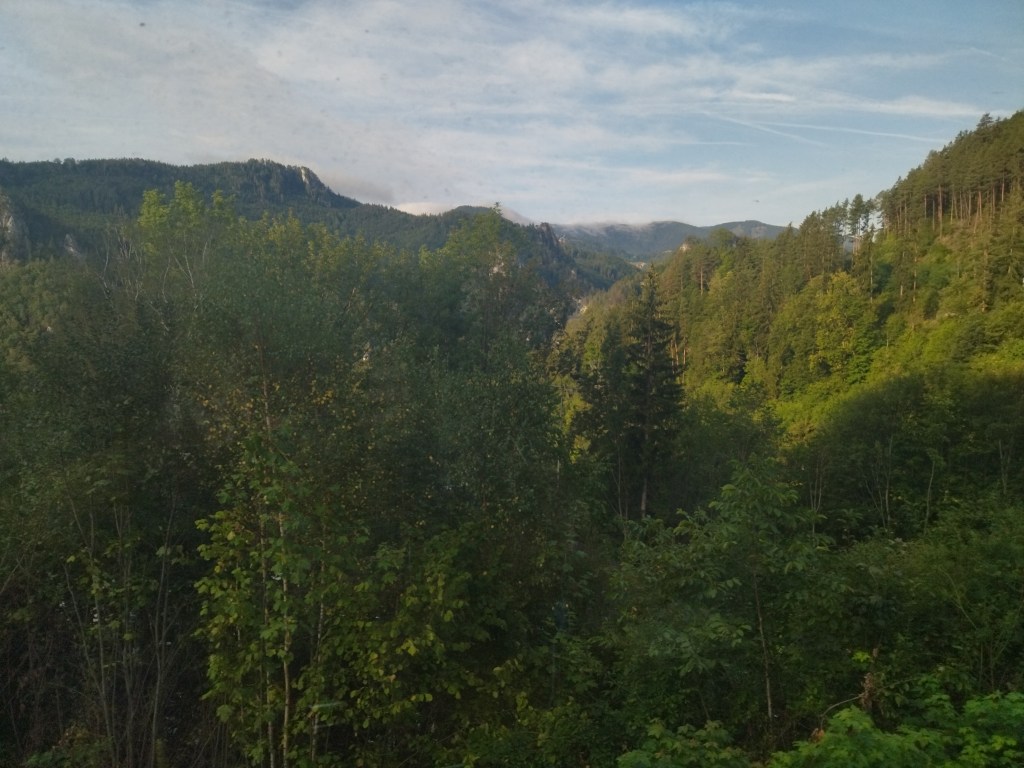
We woke up in Austria and I was happy to note that we hadn’t missed all the scenery.
We were unexpectedly met at Vienna station by our friends Elvira and Feri, and had a delicious breakfast (at a place called Das Columbus, marking the fact that 15 hours previously, we’d been in Genoa) before boarding the train for Budapest.
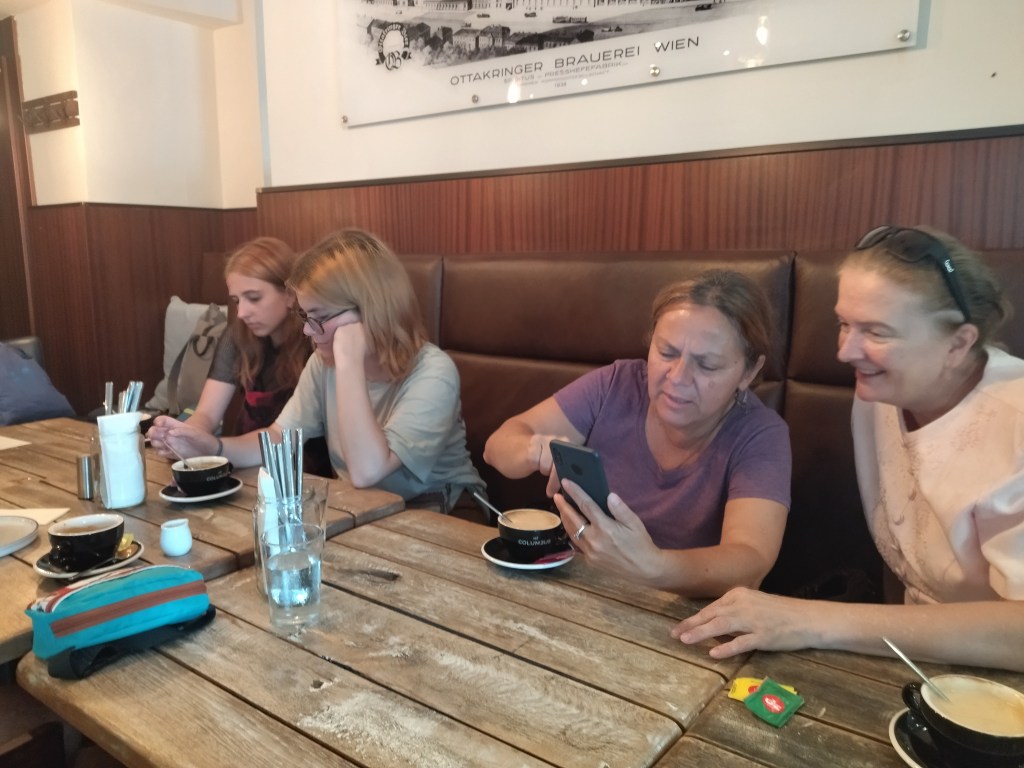
Breakfast in Bécs This was to be the last train for which we didn’t have reservations and to remind us of some of the more challenging bits of the trip, it was pretty full. I had to stand for a while and when I wasn’t standing I was waiting for someone with a reservation to turf me out of whichever seat I was occupying.
And then, after nearly 4 weeks travelling we finally encountered a dickish railway employee. (OK, there was a guy in the train bar in the Netherlands, but I just walked away from him and he didn’t trouble me again). In Budapest we went looking to see if we could get sleeping places on our last train. The guy at the window first ridiculed E for even imagining that there might be places so late in the day (though we had tried more than once elsewhere only to be told that it wasn’t possible to find out from a distance – even when that distance was only from Vienna). Then he actually sold us tickets rather than seat reservations, and then when we told him he got all huffy and blamed E for the whole thing. Rude, shit at his job, and aggressive. He’d been to the customer service school that teaches you to look down at the customer and assume they are idiots. A genuinely bad experience – and one which leaves a bad taste in the mouth.
Later on I went back to get his name so we could complain, and his attitude and body language were arrogant and snotty. The guy who was trying to mediate between us was very apologetic and kept saying “he’s sorry” when he patently wasn’t sorry at all. We need to remember how friendly and helpful and courteous all the other people we dealt with were over the last month to put this Hungarian arsehole out of our minds.
Anyway, we’re now on the train, getting close to the Romanian border and we’ll eventually get home about 10 in the morning.
-
Day 27: starting the journey home
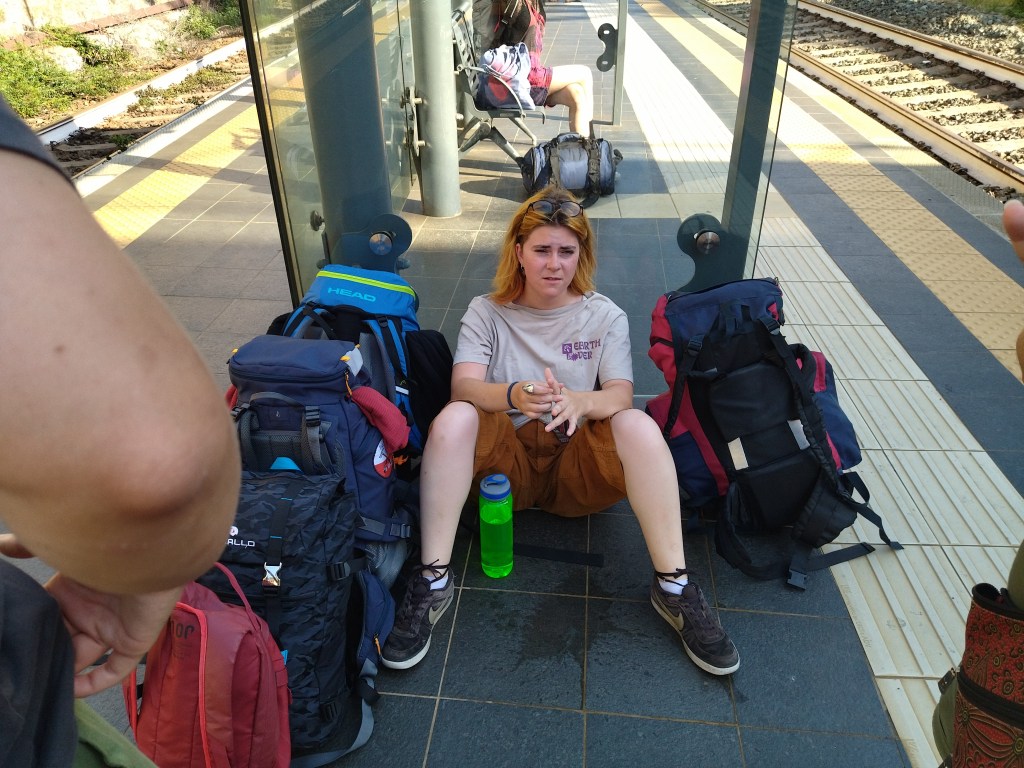
Getting ready for the long journey on Sori station We were all Sori to say goodbye to our Italian getaway, but the tickets will expire soon and some of us need to get back to work. So, reluctantly we walked up to Sori station, and got on the first train of a long and slightly foolish trek across the continent that we expect to take about 40 hours in total.
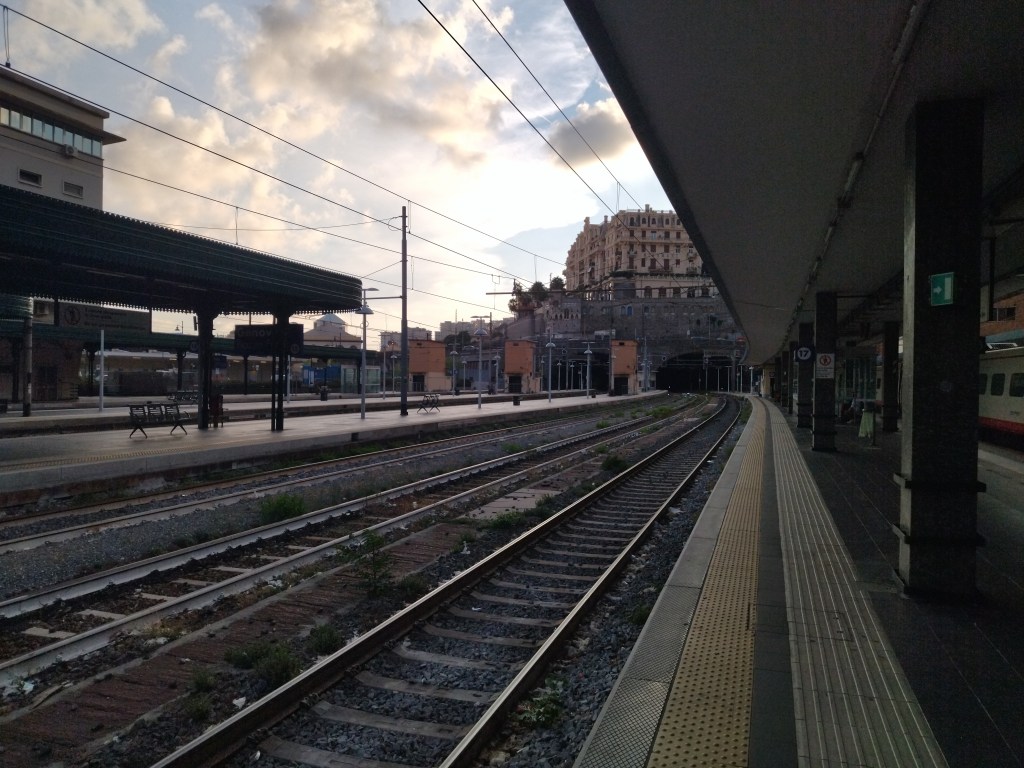
Final view of Genoa Started with the shortish half hour trip to Genova main station, before the next leg to Milan. It turns out that we should have bought some food and drink in Genoa as we had some time and there were options. We assumed, however, that we’d have the opportunity in Milan. Unfortunately, our connection was not in the immense and monumental Centrale station or even the smaller Piazza Garibaldi, but instead at somewhere called Lembrate. Lembrate, it turns out is not the kind of station that has food outlets on a Saturday evening, nor is it the kind of station that has any shops nearby. I’m going to speculate that I could probably have bought some drugs there if I’d wanted, but food and drink were limited to some vending machines. And guess what… as well as crisps and chocolate the only thing available was bloody tramezzini. Our last meal in Italy was to be tramezzini or nothing. This feels like a crime. I’m still traumatised a day later.
Despite the tramezzini trauma I’ll miss Italy and even its trains – nearly every single one of which was about 10-15 minutes late. Without fail. Though this of course was a great improvement on our experience in the UK on this trip, balloons and all. Plus I’ll miss the regular announcement reminding us to wear our effayeffaypeeduay masks.
Our train from Milan was to Vienna. I was slightly troubled that we’d probably miss out on some great scenery but needs must. Pulling an all nighter to get all the way to Vienna was worth it. Sadly we couldn’t get sleeper places but we did have one of those compartments for 6 that “only” had the 5 of us in it. I remembered back in my youth some of these type of compartments allow you to pull the seats across creating a sort of large bed. This Was was one of those types. So we (as much as possible) settled in for the night.
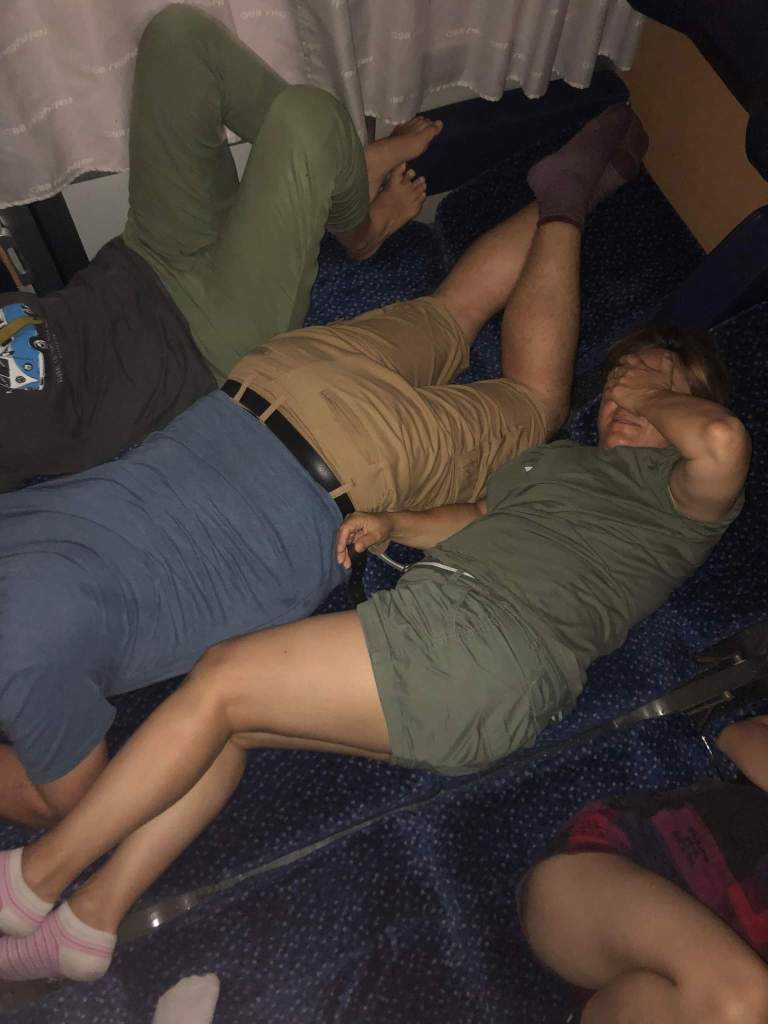
Sleeping. Kind of. *I wanted to title this post “Sori seems to be the hardest word” but I couldn’t really make it work. While I am here though I would like to mention that song, which to you may be a nice song or a saccharin piece of crap depending on your tolerance for Elton John. I would like to tell you that this song took on a new, powerful poignancy when I heard it sung by Palestinian students on the roof of the dorm building at the University I worked at in the West Bank. It, I have to tell you, broke my heart – especially because at least at that time, nearly 20 years ago now, the euphemism that Palestinians used to refer to the brutal appalling racist occupation that they lived under was “The Situation“. Hearing them then sing “It’s sad, so sad, it’s a sad sad situation, and it’s getting more and more absurd” cut me to the core. Elton could not have known how powerful those words would be, but they really were. This little aside has absolutely nothing to do with this blog, but those who know me know that my anger and loathing at the apartheid practised by Israel on the Palestinians knows no end. I will continue to do everything I can to work to end this appalling situation, including fully supporting the BDS movement. And I urge you to to do the same. Apartheid must be opposed.
Thank you for listening.
-
Day 26: Genova
I needed to go to Genova to take care of some train reservation business (the interrail app is seriously rubbish for reservations. It is, as I’m sure the kids say, a crapp. I will put together a list of all the things that people wanting to do interrail should be aware of. But not today). So a few of us set off for an afternoon in the big city.
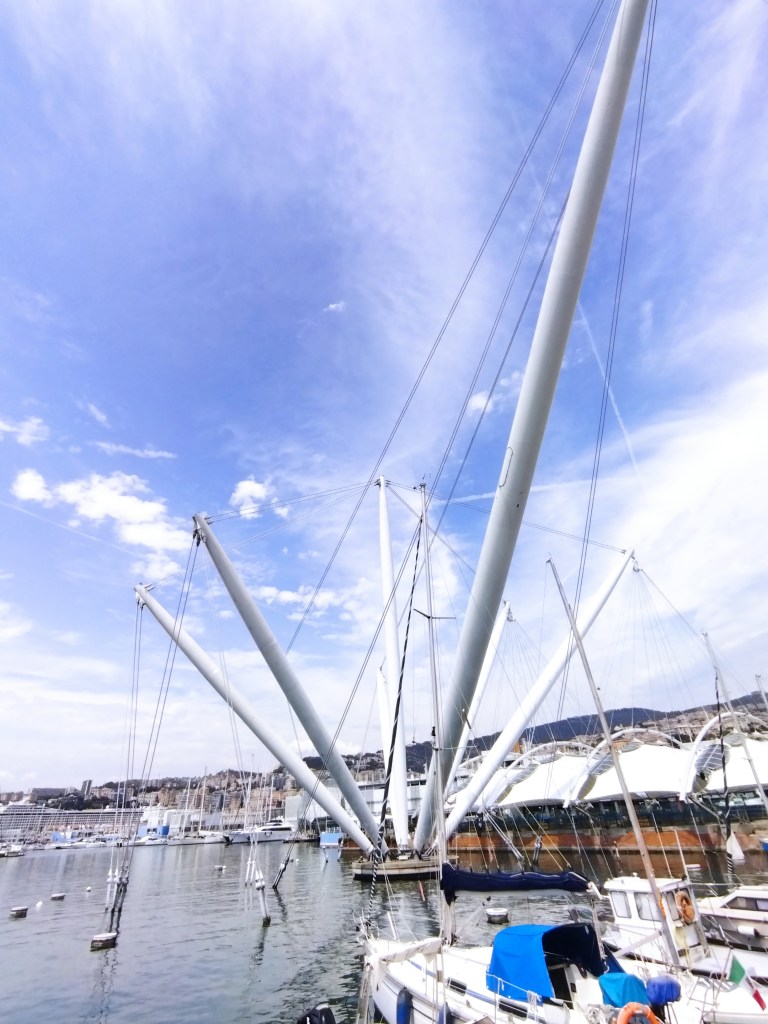
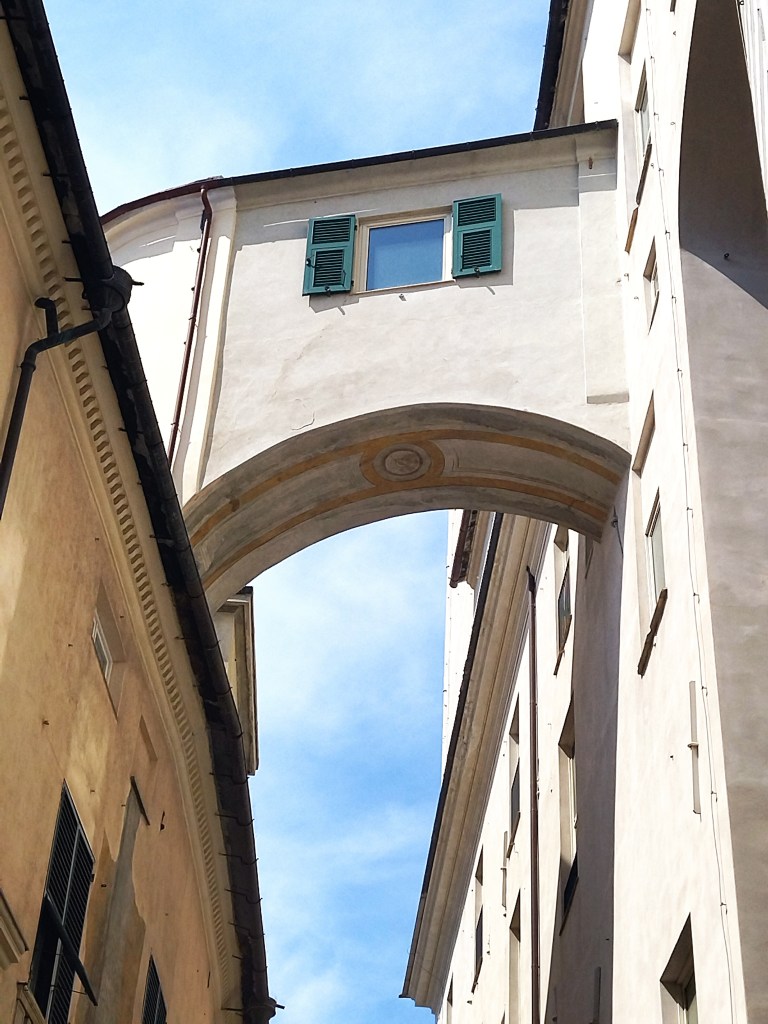
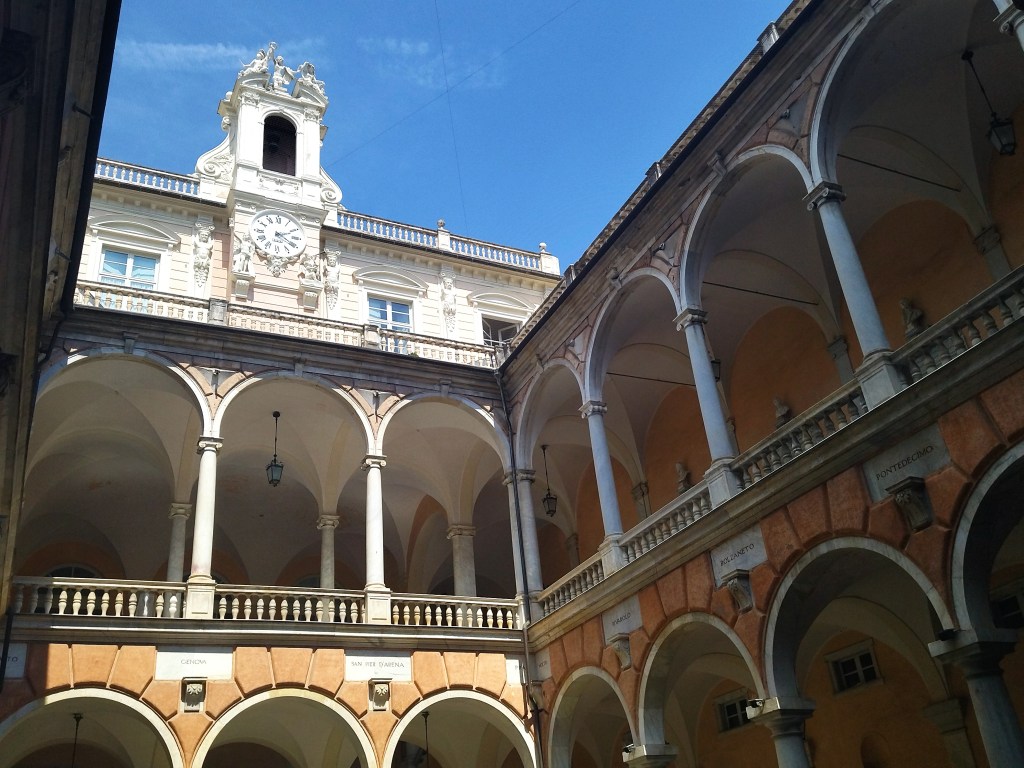
I didn’t know much about Genoa. I knew it was really important historically – Christopher Columbus, Andrea Doria, Roberto Mancini and all that, but it never seems to feature as a tourist destination, unlike most other large Italian cities. But it’s bloody great. Some seriously impressive buildings, an amazing setting, and a real lively buzz.
Here, however, I’m about to do something surprising and criticise Italian food. Before I start I want to make clear that I love Italian food. If it makes any sense to talk about a national cuisine at all, then I might go as far as to say that Italian is my favourite such cuisine. But, Italy needs to have a long hard look at itself when it comes to sandwiches. It’s baffling. They make some good bread, they have delicious ingredients, and a real love of good food. And yet they make these godawful “tramezzini” things. Shit bread, shit fillings. Why? Is it a kind of pride thing? “We didn’t invent these sandwich things so we’re not going to make any effort to make them nice”. They even cut the crusts off the bread. Weird.
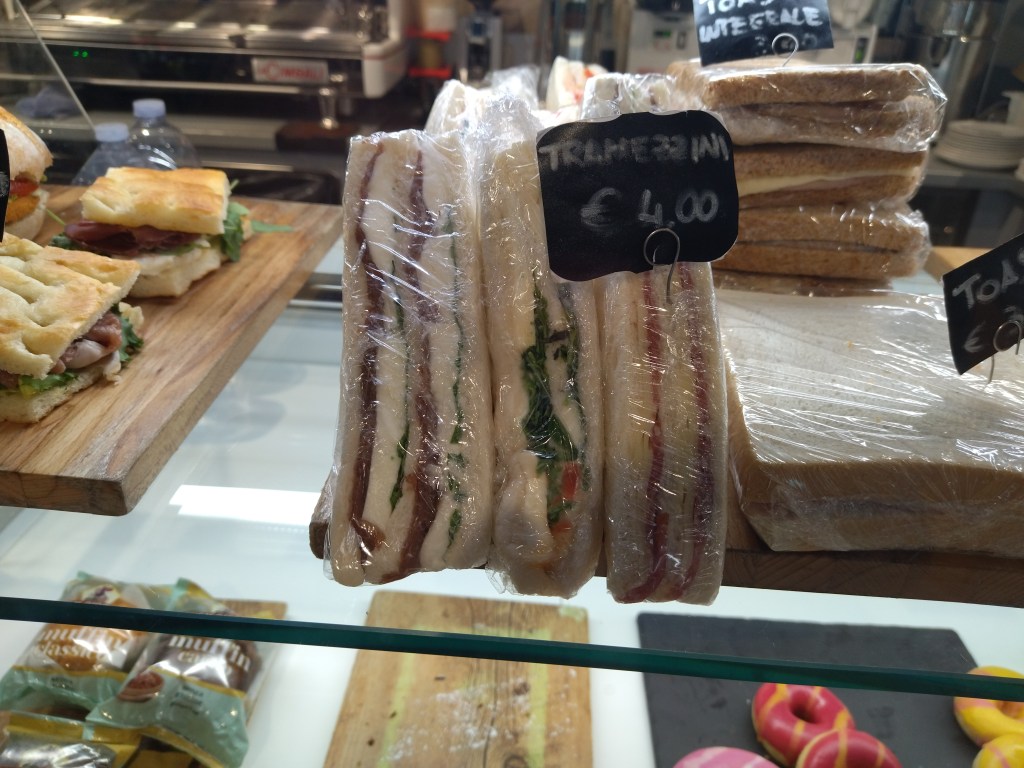
Tramezzini. Proof that a country which loves food can still produce inedible crap 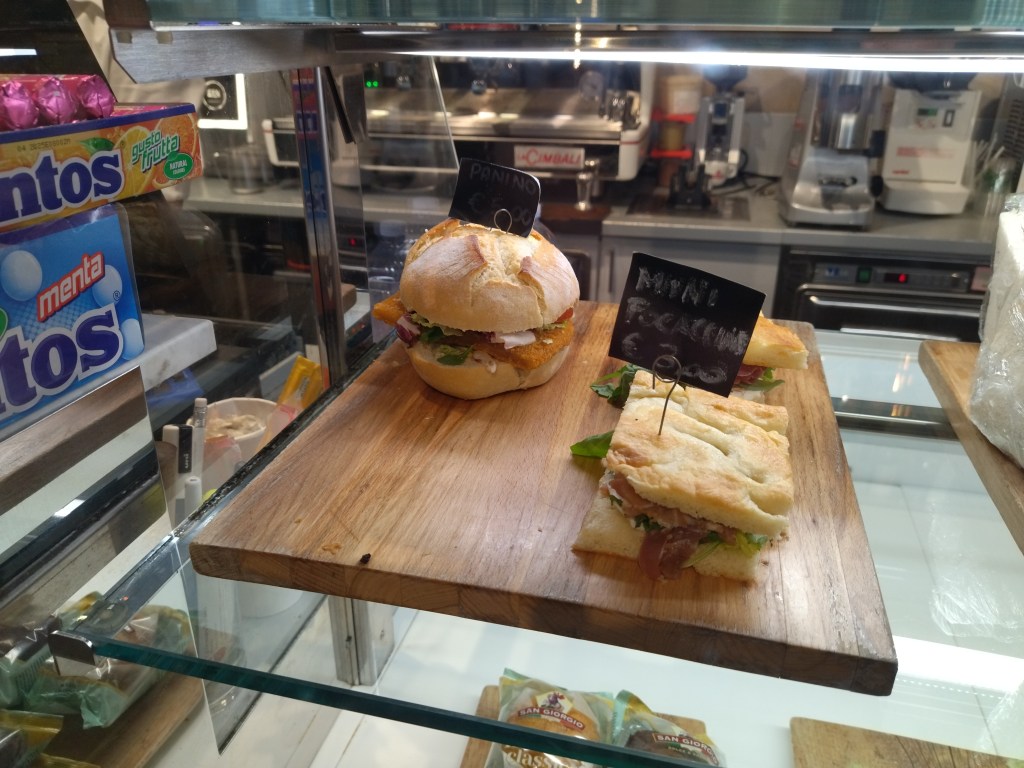
Italians can make real sandwiches. We were caught out by the eating hours thing and as we hadn’t sat down to lunch by 3 it was too late (that’s on me, obviously. I think it’s entirely reasonable that kitchen staff have a break), and as a result the only thing left for a non-cheese eater to eat, was the dreaded tramezzini. I don’t know how many times I’ve been forced into these things. But this, I swear, was the last. Sort it out, Italy. You’re better than this. You can buy bad sandwiches in most countries, but none of them are quite as bad as the tramezzini…
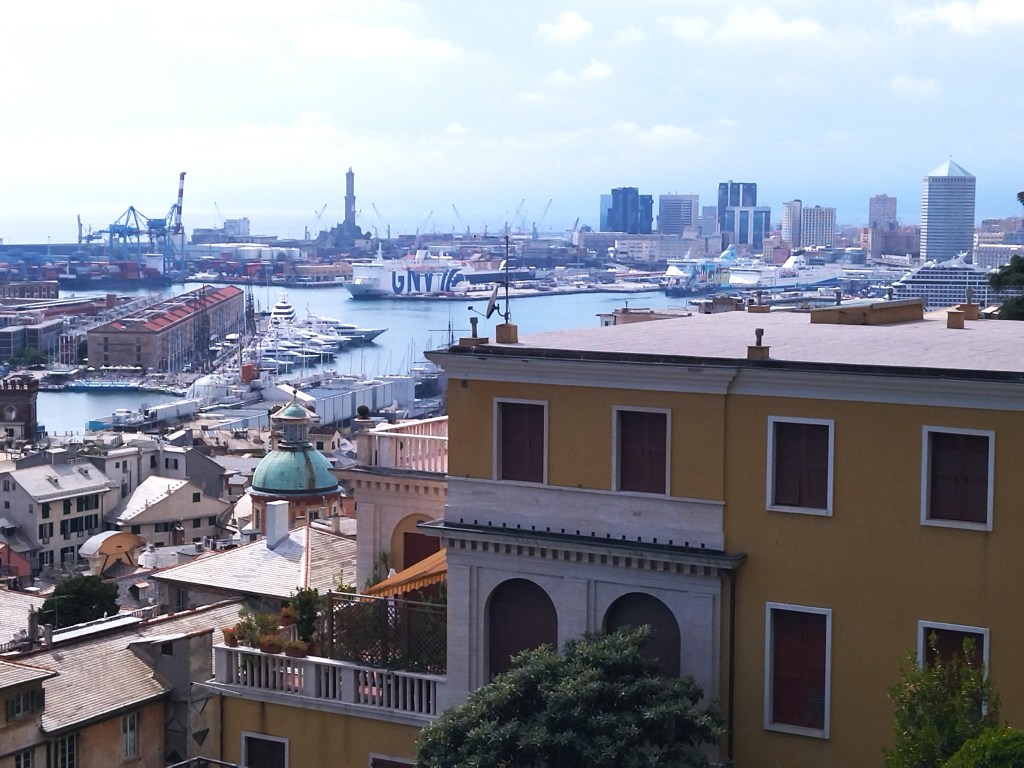
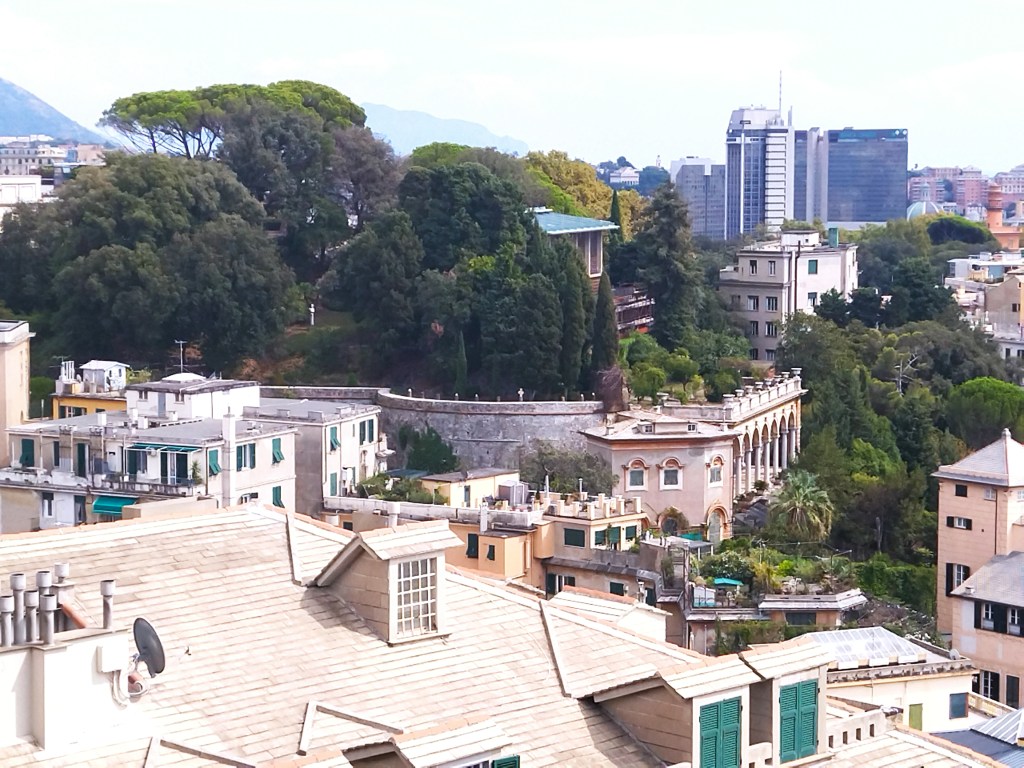
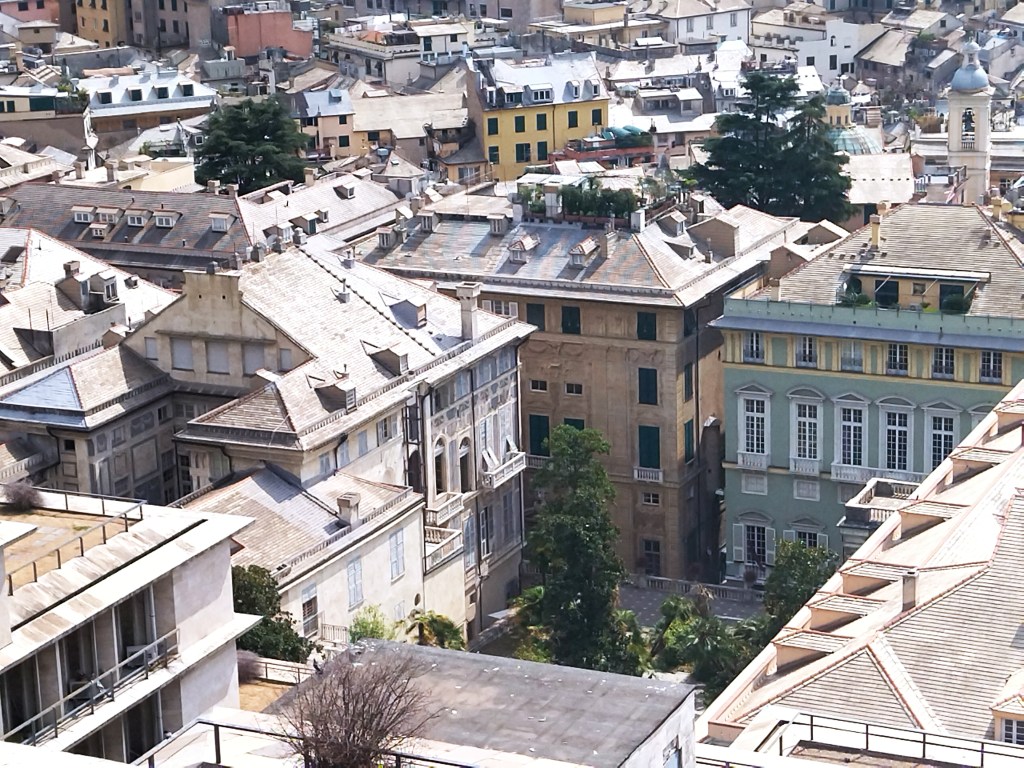
-
Day 23 & 25: Sori scenes
- In the deli. Pick up a jar of pesto. “No, don’t buy that, go across the road to that shop, they produce their own. It’s the best around” (in Genoa, pesto is taken very seriously). I’d forgotten how regional food is in Italy and how important it is. Obviously pesto is a Genovese thing but things are even more specific. Sori, where we are, even has its own pasta (trofie is the name, it’s kind of a small corkscrew shape). Recco, the next door place (4 minutes by train, the standard measure when you’ve been doing interrail for 3 weeks), is famous for focaccia.
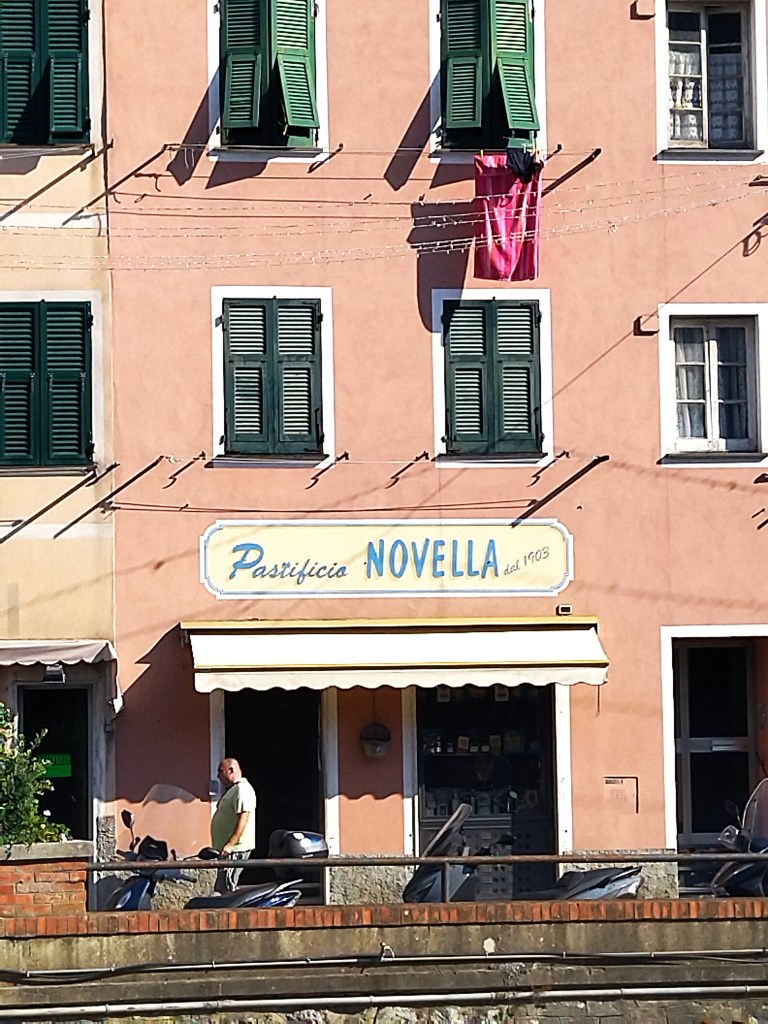
The pesto and fresh pasta shop. A real place, not part of the set from a Wes Anderson film - E and I went to the opera. Or rather we went to a concert in the local oratorio where some opera singers did songs from different operas (I want to say “arias” here but I’m not 100% sure that all songs in operas are technically arias so I’ll go with songs. Also, is the plural of opera operas? Or is opera itself the plural? It’s a bloody minefield trying to get culture, I can tell you). Anyway at this event, very close to the end of the programme, the pianist disappeared. There was a wait (I think everyone assumed he’d gone for a slash – there will be a more operatic word for that, piscioretta or something, but we’ll go with slash. But either it was the world’s longest ever slash, or we’d all assumed wrongly). As we waited to see if he’d re-emerge from wherever he’d gone, a couple of the singers filled in with pieces that weren’t part of the schedule and with the assistance of the violinist (who must have been Romanian with a name like Constantin Ciobanu). The tenor, who seemed to be the most famous judging by the number of people who started videoing him whenever he sang, was Marco Bianchi. There were some other Italians and three Chinese singers too. Eventually the pianist reappeared for the grand finale apologetically explaining the reason for his absence (an explanation I couldn’t follow, but judging by the body language, was centred on tummy troubles. Or as they say in opera, Il Diarrhoeario)
A bit of Marco Bianchi doing a song - Sori is lovely. We’re on the Golfo Paradiso apparently, which is perhaps a bit of a stretch but Golfo Extremely Nice Indeed would definitely be fair under the coastal descriptions act.
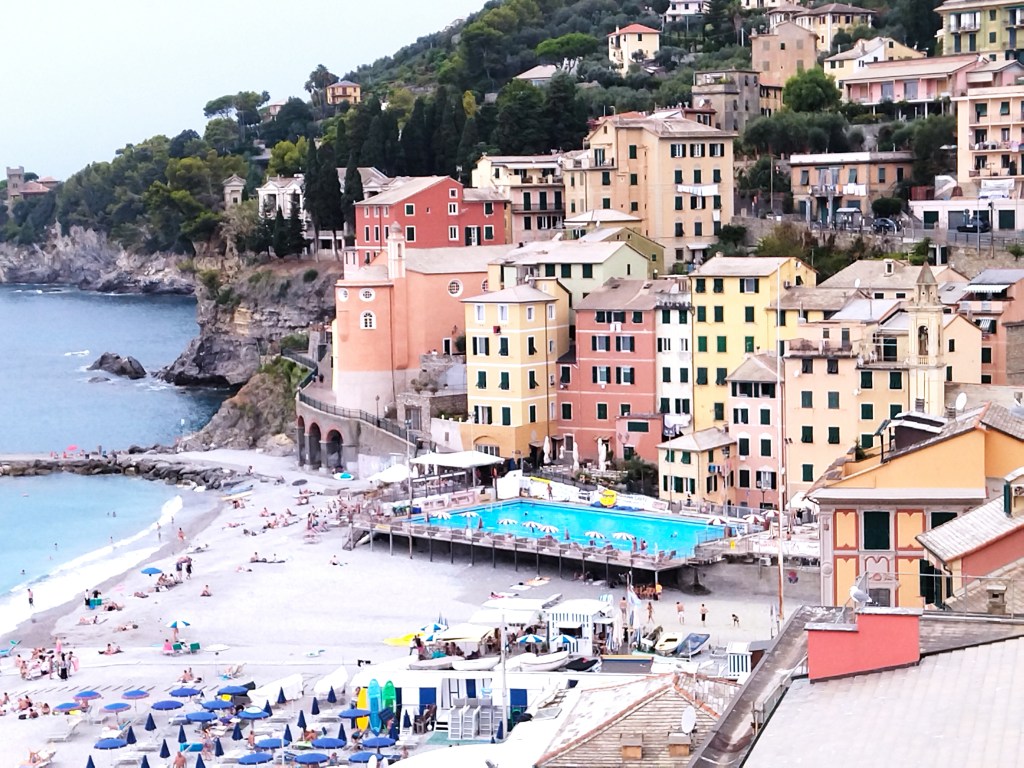
Sori. You can see our terrace on this photo but I don’t really know how to point it out using only my phone
About us
A 56 year old man (me), his 53 year old other half, and three young people (our daughters and a friend) travel round Europe by train, so you don;t have to
 Low-cost midlife crisis