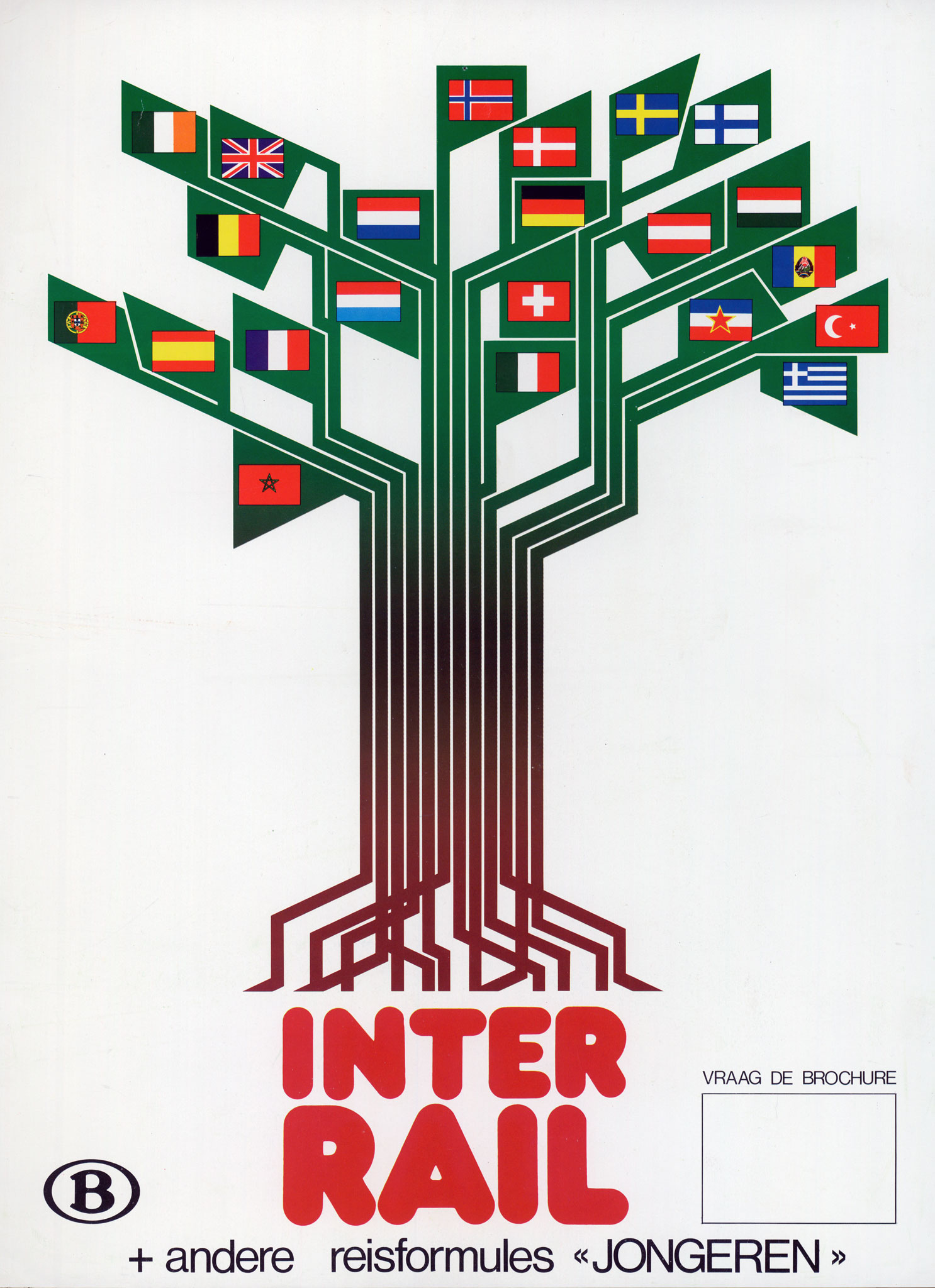
The hold up at the border created a small problem with our schedule. But to explain that, and the eventual consequences, I have to go into the difference between interrailing then and now. Back then interrailers relied on a large red book called the Thomas Cook European Timetable, an amazing tome which somehow contained train timetables from all over Europe
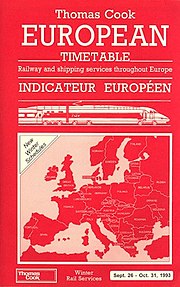
This, coupled with a vast rail map of the continent, allowed people to plan their trips. Well, the nerdy ones like, well, me, for whom a timetable and a map made the days just fly by.
I’m sorry to tell you that we modern day interrailers no longer use Thomas Cook and his wonderful volume, but instead use, what else? – an app. The link to the imaginatively named “Rail Planner” app is sent to you when you buy your tickets and off you go. I may bemoan the loss of the big red book, but the app is (so far) proving pretty good. But like all apps it has a learning curve and it has quirks that you learn about the hard way. Oh, and just as an aside the “how to use” starter instructions come in the form of a video. What is this obsession with videos? You can’t skim read a video, looking for the information you want, you have to sit through the whole bloody thing. I’m glad that people who like to get their information from videos are catered to, and maybe we textpeople had things our way for too long, but in our defence we had no idea that there was a whole bunch of videopeople out there feeling marginalised.
Anyway, I digress. Within the app you select your starting point and destination, the app gives you some options, you choose one, and the app generates a qr code which you can show to the ticket collector. That’s basically it. So, for our first journey we had chosen Miercurea Ciuc to Budapest – a journey we had done by train many times before and which we knew well. At the end of that journey, we would meet the last of our group (my older daughter, who lives there) and then almost immediately begin another leg of the trip. This turned out to be a poor way of using the app.
It was faster, we discovered, to get to Budapest by getting off this train in Debrecen and getting on a different one, which despite leaving Debrecen half an hour after our train, arrived in Budapest half an hour earlier (I think by taking a different line). So that was our cunning plan, as it would make the connection time to our next train a bit less tight. The delay meant that this wasn’t possible as it had already left. So we stayed on the Korona, resigning ourselves to the impossibility of getting the onward train we wanted to from Budapest.
Like many capital cities Budapest has a number of train terminals. The Korona was taking us to Keleti station. The Debrecen train would have taken us to Nyugati station. But neither of these facts were relevant as we had to leave from Kelenföld station. So whatever happened we had to get from one side of the city to the other. Literally, as Kelenföld is in Buda, west of the Danube, and the other two are in Pest.
We told B, my daughter, not to rush and to meet us at Kelenföld about an hour later than planned and we would catch a later train. (I’d actually made reservations online for the train we were supposed to catch, which was money that I suspected we’d now lose (the reservation document said that we could get a refund if we presented them at the departure station more than 15 minutes before the departure time on the reservation. Which obviously was, let’s just say, an annoying stipulation). But no matter, they hadn’t been expensive so, meh.
The Korona picked up speed and rather than an hour late we ended up arriving only about 20 minutes late. It still felt like an unpleasant rush to make the connection, and anyway by this time, B wouldn’t be able to make it. So we took it easy getting ourselves sorted, off the train and onto the metro.
Eventually we got to Kelenföld, were reunited as a family, and waited for the next train to Vienna, our next stop. It arrived bang on time (Austrian train, natch) and we boarded. It was somewhat chaotic and there were far fewer seats than people, so I spent about the first hour standing up, but slowly the numbers thinned out and by about Győr more or less everyone was seated.
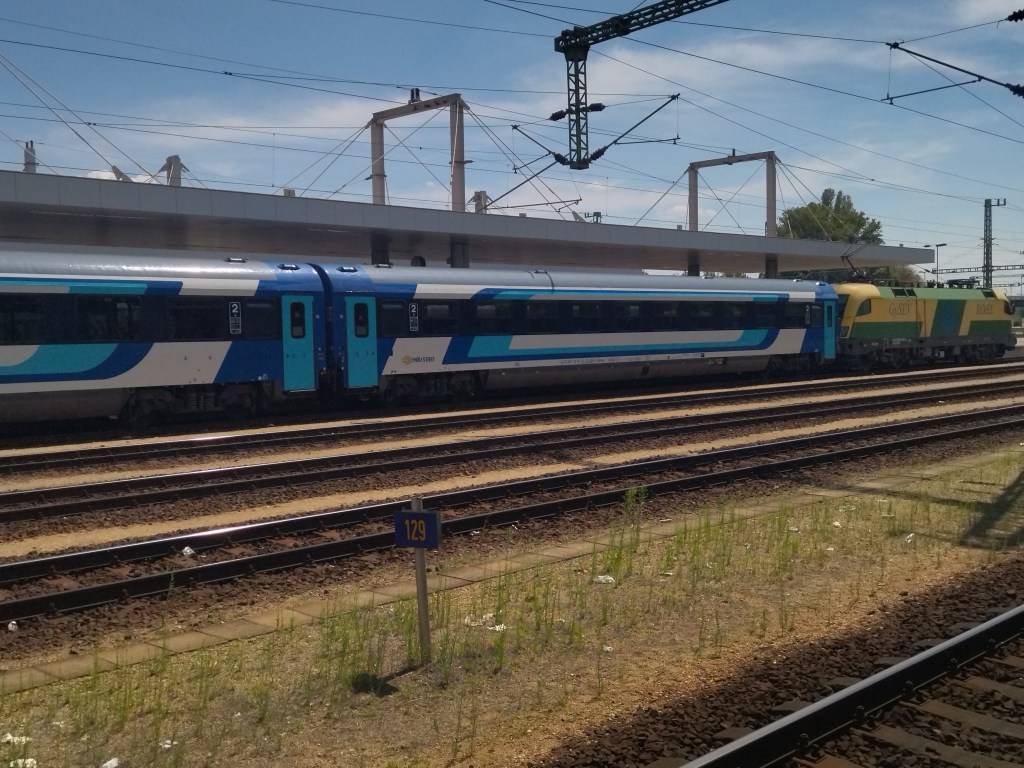
But here is where we learned of our error and one of the app’s curiosities. Because I had decided these were two trips (in my mind they were) the second trip (Budapest to Prague) had begun from Kelenföld. But the train actually started in Keleti. Where we had just come from by metro. If I had planned a single trip from Miercurea Ciuc to Prague the app would have told us this. Also if had used the old way with the book. So it turned out that we had arrived in Keleti just over 10 minutes before the train we were supposed to catch had left there – plenty of time to get it, especially as we had reservations. None of this was a terrible hassle, but the ultimate impact was that we arrived two hours later than expected in Prague, which was a minor irritation.
Anyway, we got to Vienna, had some lunch as we now had a bit of time, and caught the 17.10 train to Prague. I have to say that this last train seemed interminable. We found a free Austrian newspaper and tried to amuse ourselves with the horoscopes. “Krebs!” (unnecessarily long bursts of laughter) “Wasserman”! (even longer) . Truly that’s how low we had sunk. The Czech countryside was nice, but I think we were all a bit trained out
We finally got to Prague Station at about 10pm more or less exactly 26 hours after we had boarded in Romania. Happily we had no plans to get on a train on Day 3
 Low-cost midlife crisis
Leave a comment